NASA - National Aeronautics and Space Administration
+ Visit NASA.gov
NASA - Global Energy and Water Cycle Experiment - Surface
    Radiation Budget
Home      SRB Data Products      Examples of SRB Data      Access SRB Data     
Access Data
 
Documentation
 
Related Links

NASA/GEWEX Surface Radiation Budget (SRB) Project

The Global Energy and Water-cycle Experiment (GEWEX) is an integrated program of research, observations, and science activities with the goal of providing data sets to support accurate predictions of global and regional climate change. Research in the areas of Earth radiation budget, hydrometeorology, and modeling/prediction contribute to meeting the goal of GEWEX.

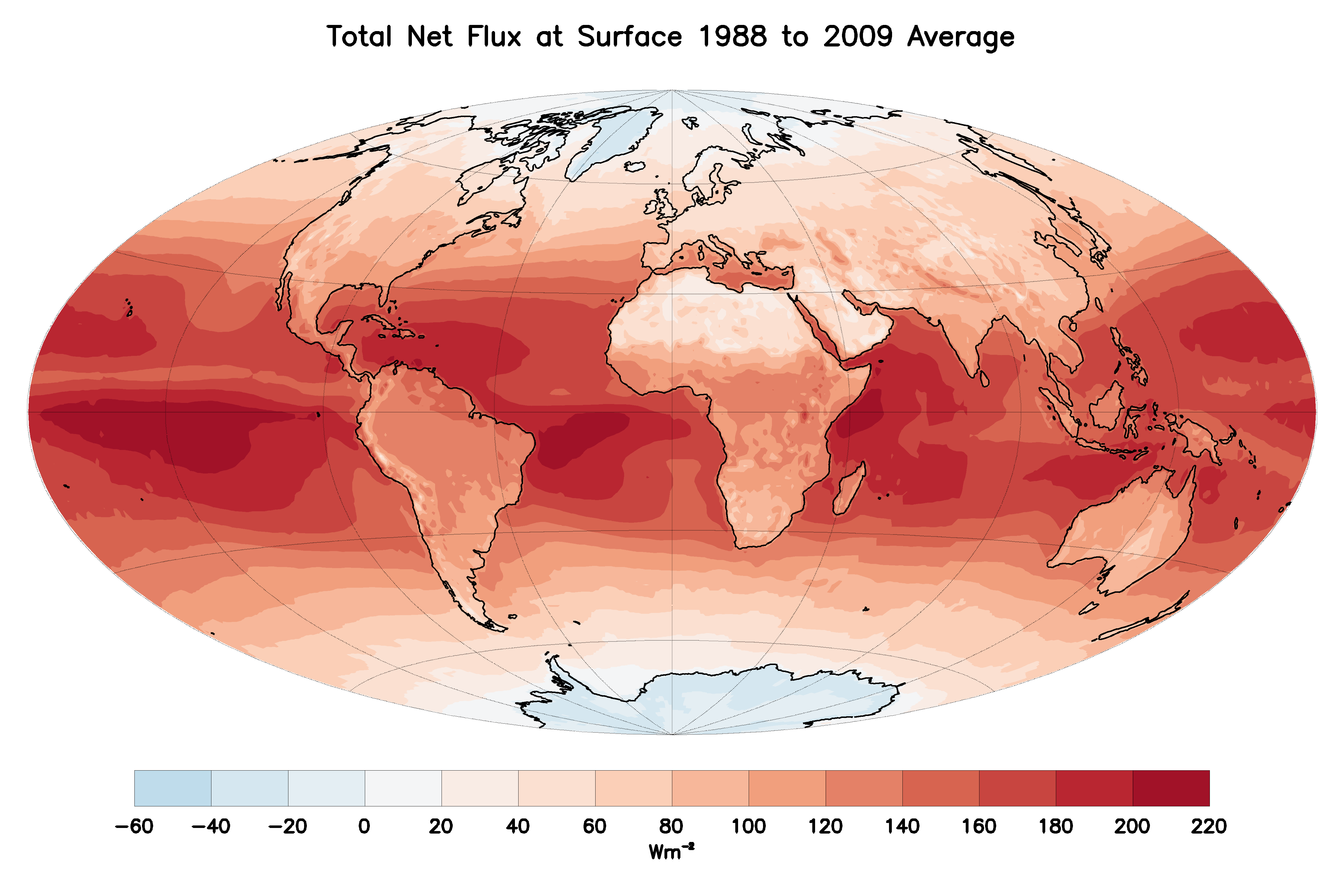
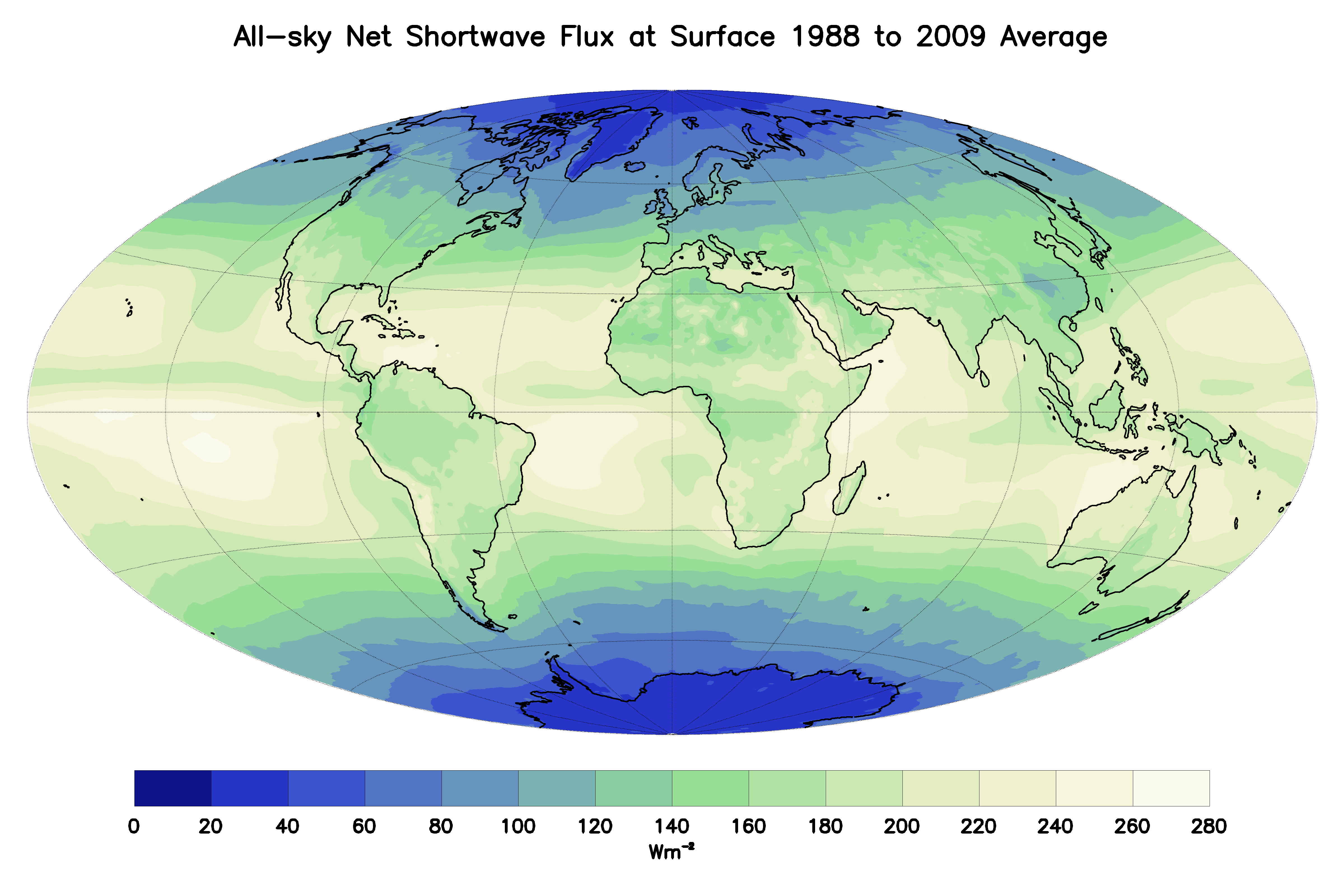
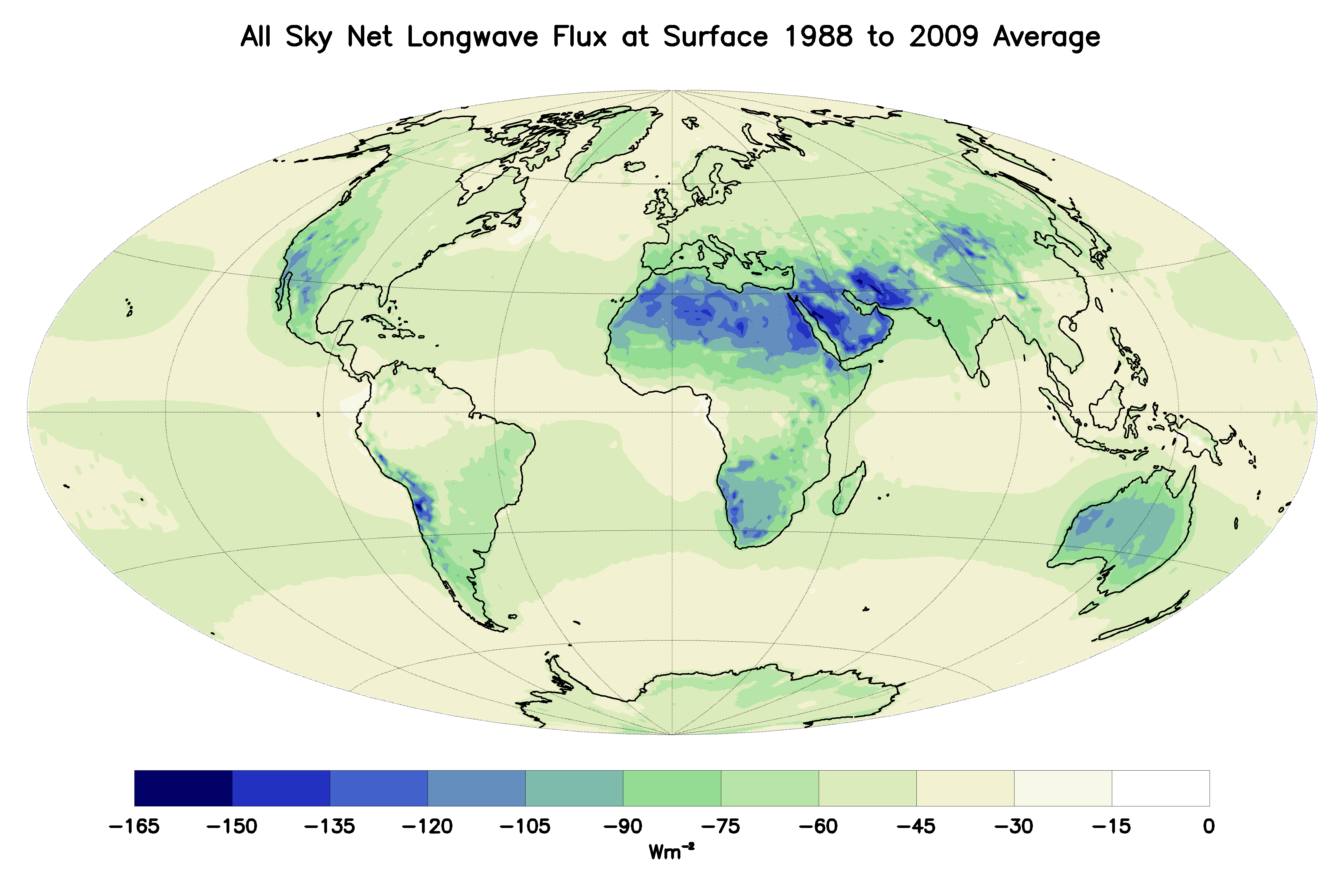
The NASA/GEWEX SRB project is a major component of the GEWEX radiation research. The objective of the NASA/GEWEX SRB project is to determine surface, top-of-atmosphere (TOA), and atmospheric shortwave (SW) and longwave (LW) radiative fluxes with the precision needed to predict transient climate variations and decadal-to-centennial climate trends.

To accomplish this objective, SW and LW SRB data sets are derived on a 1° x 1° global grid with two sets of algorithms, known as primary and quality-check algorithms, and a variety of data sources. The primary SW algorithm is adapted from Pinker and Laszlo (Modeling Surface Solar Irradiance for Satellite Applications on a Global Scale, J. Appl. Met., 31, 194-211, 1992) and the primary LW algorithm is an adaptation of Fu et al., (JAS, Vol. 54, 2799-2812, 1997). The quality-check SW algorithm known as the Langley Parameterized Shortwave Algorithm (LPSA; Gupta et al. - NASA/TP-2001-211272, Dec. 2001; available on the internet ) was developed at the Langley Research Center by W. F. Staylor, and the quality-check LW algorithm is by Gupta et al. (J. Appl. Meteor., 31, 1361-1367, 1992). The primary data sources are: 1) the International Satellite Cloud Climatology Project (ISCCP) DX data set for deriving cloud parameters, and 2) the Goddard Earth Observing System reanalysis products (GEOS-1 and GEOS-4) for meteorological profiles.

Additionally, column ozone data from the Total Ozone Mapping Spectrometer (TOMS) and clear-sky TOA albedos from the Earth Radiation Budget Experiment (ERBE) data are used as input to the SW models. ERBE TOA measurements are also used for comparisons with the Pinker model output. Ground-based measurements for the validation of model products are obtained from the Baseline Surface Radiation Network (BSRN), the Global Energy Balance Archive (GEBA), and other national and international networks.


USA.gov - Government Made Easy
+ NASA Privacy Statement, Disclaimer,
and Accessibility Certification

+ Feedback on Langley Products and Services
NASA - National Aeronautics and Space Administration
Curator: Colleen Mikovitz
NASA Official: Paul Stackhouse
Last Updated: December 31, 1969
+ Contact NASA